
"One, we told the Canadians that this is not the Government of India's policy," Jaishankar said. "Two, we told the Canadians saying that look, if you have something specific, if you have something relevant, let us know. We are open to looking at it," Jaishankar said while responding to a question from former US ambassador to India and CFR Distinguished Fellow Kenneth Juster, in his first public comments on the issue.

External Affairs Minister S Jaishankar has said India faces a 'very complicated challenge' from China, and the Narendra Modi government has taken steps to ensure no attempts are made to change the status quo in the border areas unilaterally.
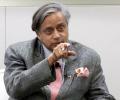
"China is an absolutely impossible factor to ignore in what has been our confrontation with Pakistan," Tharoor said.

The meeting between Jaishankar and Pompeo comes at a time both India and the US are at loggerheads with China.
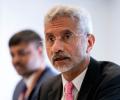
America's relationship with Pakistan has 'not served' either of the two countries, External Affairs Minister S Jaishankar said on Sunday raising questions on the Biden administration's approval of a $450-million sustenance package for F-16 fleet.
He went on to say that even though this has not been discussed, he is going to 'increase trade substantially with both of these great Nations.'

Prime Minister Narendra Modi is set to hold bilateral meetings with US President Donald Trump and other prominent American personalities during his two-day visit to the United States.
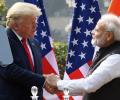
Prime Minister Narendra Modi and United States President Donald Trump on Monday vowed to work towards a 'trusted' partnership with a focus on boosting India-US cooperation in areas of trade, energy and defence in their first phone conversation since the American leader's inauguration last week.
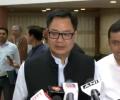
Defence Minister Rajnath Singh told an all-party meeting that at least 100 terrorists were killed in the Indian strikes on terror sites in Pakistan and Pakistan-occupied Kashmir under 'Operation Sindoor'. Leaders from various parties showed maturity and extended all support to the government and armed forces.
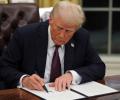
Dr Jaishankar is expected to discuss the dates for the fifth Quad leaders' summit in India later this year.
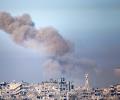
Jaishankar described the October 7 strikes on Israeli cities by Hamas as "terrorism" but at the same time asserted India's long-standing support for a negotiated two-state solution to the Palestine issue.

He also said that when it comes to proscribing some terrorists, the United Nations Security Council (UNSC) has 'regrettably' been unable to act in some cases because of 'political considerations'.

"Insofar as the US is concerned, certain inputs were given to us as part of our security cooperation with the United States. Those inputs were of concern to us because they (were) related to the nexus of organised crime, trafficking and other matters.

The west somehow think it is some kind of God-given right, Jaishankar said.

Jaishankar said that the West has had a "bad habit" for a long time, of commenting on others, and it thinks it has a "God-given right" to speak about the internal matters of other countries.
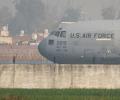
The deportation of 104 Indian nationals from the US, followed by another 119 set to arrive in Amritsar on Saturday night, has sparked controversy in India over the treatment of returnees. The US government's intensified crackdown on undocumented immigrants has led to criticism of the use of handcuffs and shackles for deportees, even those who have committed no crimes beyond immigration violations. The issue has led to heated debates in the Indian Parliament, with opposition leaders demanding an inquiry into the deportation process. The Indian government is engaging with US officials to ensure the humane treatment of deportees, while also facing the challenge of reintegrating returnees into Indian society. The deportations highlight the ongoing tension between border control and human rights, and the complexities of US-India relations.

Enforcement Directorate officials said on Friday they are probing a 'complex network' of agents and facilitators in India, Canada and the US who help Indians illegally enter the US via 'bogus' admissions in Canadian colleges.

Rather than risk a car jam, External Affairs Minister Subrahmanyam Jaishankar decided to take a brisk walk from India's permanent mission to the UN to attend the G4 summit.

'Sullivan and Jaishankar welcomed the cooperation in recent weeks that resulted in deliveries of over USD 500 million in COVID-19 relief supplies from the US federal and state governments, US companies and private citizens across America for the people of India'
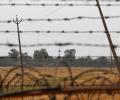
The UN Security Council could meet soon to discuss the situation between India and Pakistan, with the UNSC President expressing concern over rising tensions between the nuclear-armed neighbors. The President, Ambassador Evangelos Sekeris of Greece, said a meeting would provide an opportunity to express views and help diffuse tensions. Sekeris also condemned terrorism in all its forms, including the recent attack in Pahalgam, and called for de-escalation and dialogue between India and Pakistan.
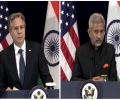
Asserting that it exercises a choice which it believes is in its national interest, India on Tuesday said it has no difficulties with Russia on servicing of military equipment and spare parts in the aftermath of the war in Ukraine.
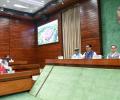
At the customary meeting ahead of the session beginning Monday, the opposition raised various issues, including voter roll revision in Bihar, the Pahalgam terror attack and Trump's 'ceasefire' claims.
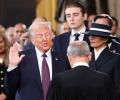
In a remarkable comeback to power, Donald J Trump Monday took oath as the 47th president of the United States and immediately promised a blitz of executive orders as he announced the beginning of a 'golden age' of America.

'Fears in Washington began to intensify when it was realised that subsequent Pakistani and Indian attacks on major military facilities -- which were significant in terms of geographic scope and intensity -- could rapidly take both sides to where neither actually wanted to go.' 'The US objective was to stop the fighting as soon as possible. Everything else was secondary.'
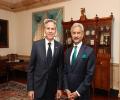
India and the US agreed to continue their cooperation in the areas of defence, space and clean energy as External Affairs Minister S Jaishankar met Secretary of State Antony Blinken here, amid a simmering diplomatic row between India and Canada over the killing of a Khalistani separatist.

India on Thursday night swiftly foiled Pakistan's attempts to hit various key Indian installations including military stations at Jammu, Pathankot and Udhampur with drones and missiles, the defence ministry said.

External Affairs Minister S Jaishankar met United States Secretary of State Antony Blinken in Phnom Penh on Sunday and discussed bilateral ties, the raging Ukraine conflict, energy issues, G20 and the situation in the Indo-Pacific, days ahead of a possible meeting between Prime Minister Narendra Modi and President Joe Biden.
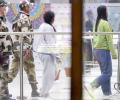
The Indian government has defended the use of Amritsar as a deportation hub for US flights carrying Indian deportees, despite objections from Punjab Chief Minister Bhagwant Mann. Government sources said Punjab has the highest number of deportees among Indian states, with 126 out of 333 people deported since February 5. The sources added that 23 flights carrying Indian deportees have arrived in the country since May 2020, all landing in Amritsar. The move has sparked controversy, with opposition parties protesting the treatment meted out to the deportees and demanding that the Indian government take up the issue with the US. Mann has accused the Centre of trying to defame Punjab and said a holy city like Amritsar should not be made a "deport centre".

Jaishankar said that he can talk for himself and does not do politics while travelling abroad.
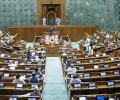
The deportation of Indians from the United States, deaths in the Maha Kumbh stampede and the joint Parliamentary committee report on the Waqf bill were among the issues that led to heated exchanges and some disruptions in an otherwise smooth first part of the Budget session that ended on Thursday.
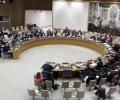
India has been at the forefront of the years-long efforts to reform the security council, saying it rightly deserved a place as a permanent member.
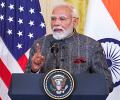
Those who stay in other countries illegally do not have any legal right to be there, Modi said.
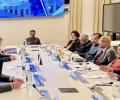
India has secured international support in its fight against terrorism, with Russia, Japan, and the United Arab Emirates expressing solidarity and a commitment to working together to combat the threat. This follows a recent terrorist attack in Pahalgam, India, which claimed 26 lives. Multi-party parliamentary delegations from India briefed the leaderships of these countries on Operation Sindoor, India's response to the attack, and discussed ways to enhance cooperation in counter-terrorism and combating radicalism. These developments highlight the growing global consensus against terrorism and the importance of international collaboration to address this shared challenge.
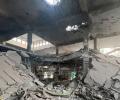
In a strong retaliation to the Pahalgam massacre, India's armed forces early Wednesday destroyed nine terror sites including that of Jaish-e-Mohammad and Lashkar-e-Taiba in Pakistan and Pakistan-occupied Kashmir (PoK) using deep strike missiles in a 25-minute-long 'measured and non-escalatory' mission.
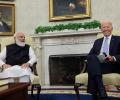
'The message that we intend to leave with at the end of this trip is one of real gratitude for the friendship and the close partnership that President Biden and Prime Minister Modi have enjoyed over the last four years, but also one of tremendous optimism because we see a lot of opportunity in the future.'
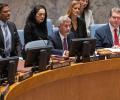
The world today sees them (Pakistan) as the epicentre of terrorism, Jaishankar said.
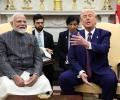
'Trump's aggressive stance towards China and preference for military posturing could shift the Quad's balance towards overt militarisation.'

Jaishankar also met his Iranian counterpart H Amirabdollahian and held productive discussions on bilateral economic cooperation, Afghanistan and the joint comprehensive plan of action, also known as the Iran nuclear deal.

Jaishankar said that India and Russia have a long-standing relationship that has certainly served New Delhi's interests well.
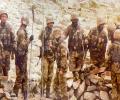
Jaishankar said China, in violation of the 1993 and 1996 agreements not to mass troops on the Line of Actual Control, chose to do so, and added that its attempt was obviously to unilaterally change the LAC.
 © 2026 Rediff.com - Advertise with us - Disclaimer - Privacy Policy - Sitemap - Feedback - About us - Terms of use - Grievances